In today’s highly competitive manufacturing environment, end-of-line packaging operations face increasing pressure to deliver higher speeds, lower labor costs, and consistent product quality. Manual packing methods often struggle to keep up with growing production demands, leading to bottlenecks, packing errors, and increased operational expenses.
An automatic corrugated box packing line offers an efficient solution for modern secondary packaging requirements. By integrating advanced packaging equipment, intelligent controls, and automated handling technologies, these systems streamline the entire packing workflow. Whether handling consumer goods, wet wipes, food products, pharmaceuticals, or household items, modern packaging systems can accommodate a wide range of product types and packaging formats while maintaining high efficiency and accuracy.
Step-by-Step Breakdown of the Packaging Process
A modern automatic corrugated box packing line combines multiple packaging machines into a fully synchronized operation. Each stage plays a critical role in ensuring smooth and reliable case packing.
Step 1: Box Erecting and Forming
The process begins with automatic box erection.
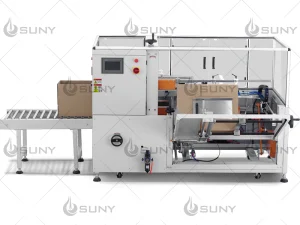
Flat-packed corrugated boxes are loaded into a magazine and fed into a box-forming machine. Using vacuum suction systems, mechanical arms, or servo-driven mechanisms, the machine opens and shapes the box into its final form.
Key functions include:
- Automatic box feeding
- Precise box opening and squaring
- Bottom flap folding
- Bottom sealing with tape or hot-melt glue
This stage ensures every box enters the production line correctly formed and ready to receive products.
Step 2: Product Collation and Infeed
Once boxes are prepared, products move toward the packing station through conveyors and product handling systems.
At this stage, products are:
- Accumulated into predefined quantities
- Aligned and oriented correctly
- Grouped according to packing patterns
- Inspected for quality and positioning
Advanced sensors and control software ensure smooth product flow while preventing jams or misalignment. This preparation step is essential for maintaining efficiency throughout the entire packaging process.
Step 3: Loading and Case Packing
The heart of the system is the case packing operation.
Depending on product characteristics and production requirements, different loading methods may be used:
Top-Load Case Packing
Products are loaded vertically into open boxes from above. This method is commonly used for bottles, jars, canisters, and rigid containers.
Side-Load Case Packing
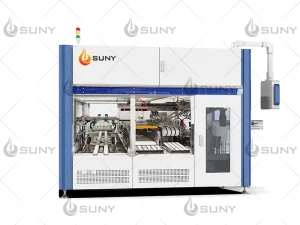
Products are pushed horizontally into the box. This approach works well for cartons, pouches, tissue packs, and bundled products.
Robotic Case Packing
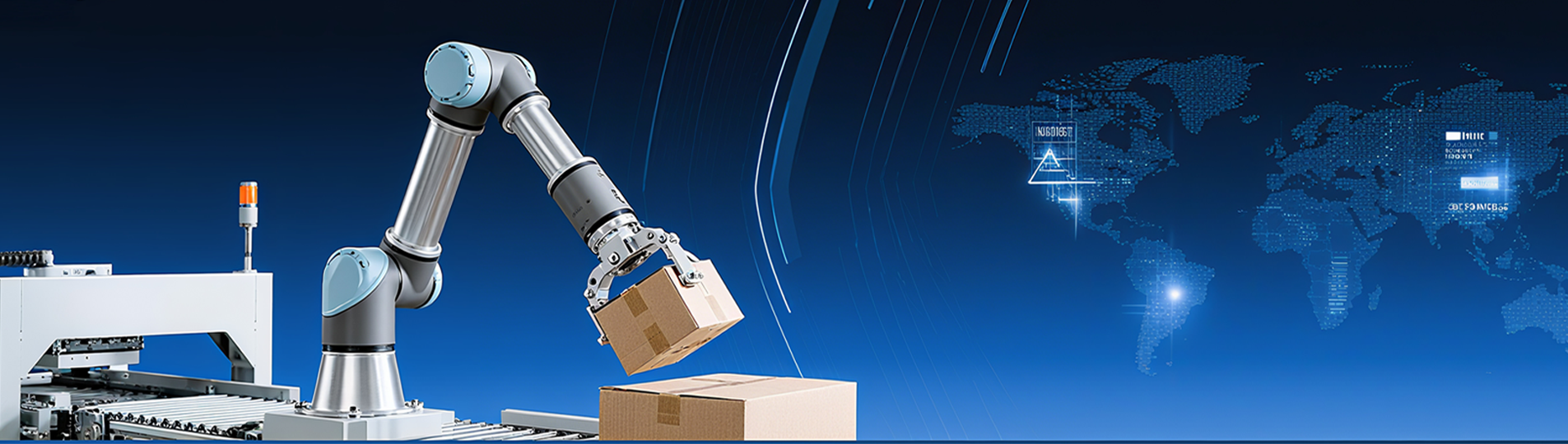
Robotic arms equipped with vacuum grippers or customized end-effectors pick and place products with exceptional flexibility. These solutions can easily adapt to changing product formats and production schedules.
Modern packaging machines use servo-driven technology to ensure precise product placement, minimizing damage and maximizing packing consistency.
Step 4: Sealing and Discharge
After loading is complete, the filled boxes move to the sealing section.
Depending on packaging requirements, boxes may be sealed using:
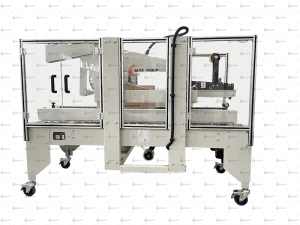
- Pressure-sensitive tape
- Hot-melt adhesive
- Combination sealing methods
Once sealed, the finished cases are discharged onto conveyors and transferred to palletizing, warehousing, or shipping operations.
This final stage ensures secure packaging that protects products throughout transportation and distribution.
The Business Value: How Automation Reduces Costs
For manufacturers seeking higher productivity, automated automation systems provide significant financial advantages.
Replacing manual labor with integrated packaging systems dramatically reduces costs associated with labor shortages, repetitive tasks, and human error. Automated operations can run continuously at high speeds while maintaining consistent quality standards.
Additional benefits include:
- Increased production throughput
- Reduced packaging material waste
- Improved workplace safety
- Lower product damage rates
- Faster product changeovers
- Better production data and traceability
By optimizing the entire packaging process, companies can achieve a faster return on investment while improving overall operational efficiency.
Conclusion
An automatic corrugated box packing line transforms traditional secondary packaging into a highly efficient, reliable, and scalable operation. From erecting corrugated boxes and collating products to automated case packing and sealing, every step is designed to maximize productivity and consistency.
As manufacturing demands continue to grow, investing in advanced packaging equipment and intelligent automation systems is no longer optional—it is a strategic advantage. If your facility handles a wide range of products and seeks to improve efficiency while reducing operating costs, upgrading to modern packaging systems could be the next step toward a smarter, more competitive factory floor.