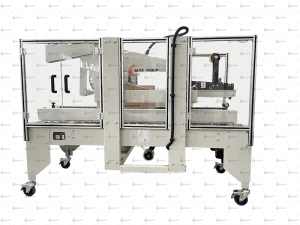
In today’s highly competitive manufacturing industry, speed, consistency, and efficiency are no longer optional—they are essential. Whether you produce wet wipes, tissue products, food, pharmaceuticals, cosmetics, or household goods, your packaging line directly impacts productivity, labor costs, and customer satisfaction.
This is where an automatic secondary packaging machine becomes a game changer.
Unlike primary packaging, which directly encloses the product, secondary packaging organizes multiple individual packages into cartons, cases, or bundles for easier transportation, storage, and retail distribution. Modern automatic secondary packaging systems significantly reduce manual labor while improving packaging accuracy and production speed.
If you’re looking to increase output, minimize downtime, and prepare your factory for Industry 4.0, investing in an automatic secondary packaging machine could be one of the smartest decisions you’ll make.
In this guide, we’ll explain how these machines work, their key benefits, common applications, frequently asked questions, and what to consider before purchasing one.
What Is an Automatic Secondary Packaging Machine?
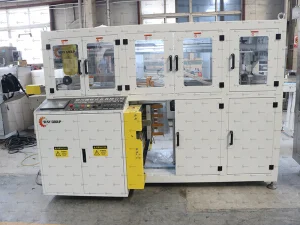
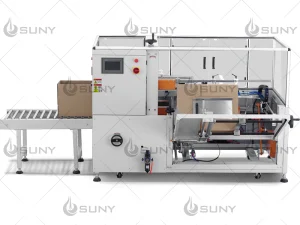
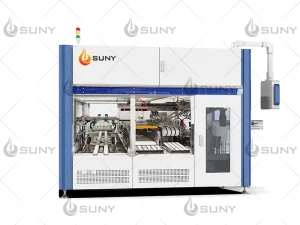
An automatic secondary packaging machine is an intelligent packaging system designed to automatically collect, arrange, group, and pack finished products into larger containers such as:
- Carton boxes
- Corrugated cases
- Shrink bundles
- Display cartons
- Shipping boxes
The entire process—from product feeding and orientation to case packing and sealing—is completed automatically with minimal human intervention.
Many manufacturers also integrate the machine with:
- Automatic conveying systems
- Carton erectors
- Case sealers
- Robotic palletizers
- Warehouse automation systems
This creates a complete end-of-line packaging solution.
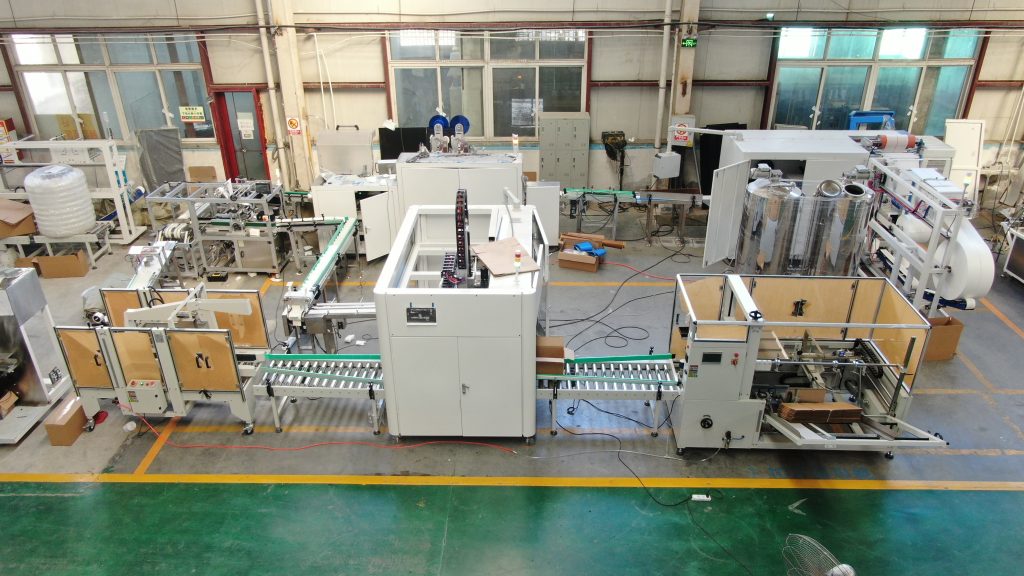
How Does an Automatic Secondary Packaging Machine Work?
Although configurations vary by industry, the workflow generally includes the following steps:
1. Product Collection
Finished products arrive from the primary packaging line via conveyors.
2. Product Arrangement
The machine automatically sorts and aligns products according to the required packing pattern.
3. Automatic Grouping
Products are grouped into preset quantities.
For example:
- 6 packs
- 12 packs
- 24 packs
- Custom bundle sizes
4. Carton Loading
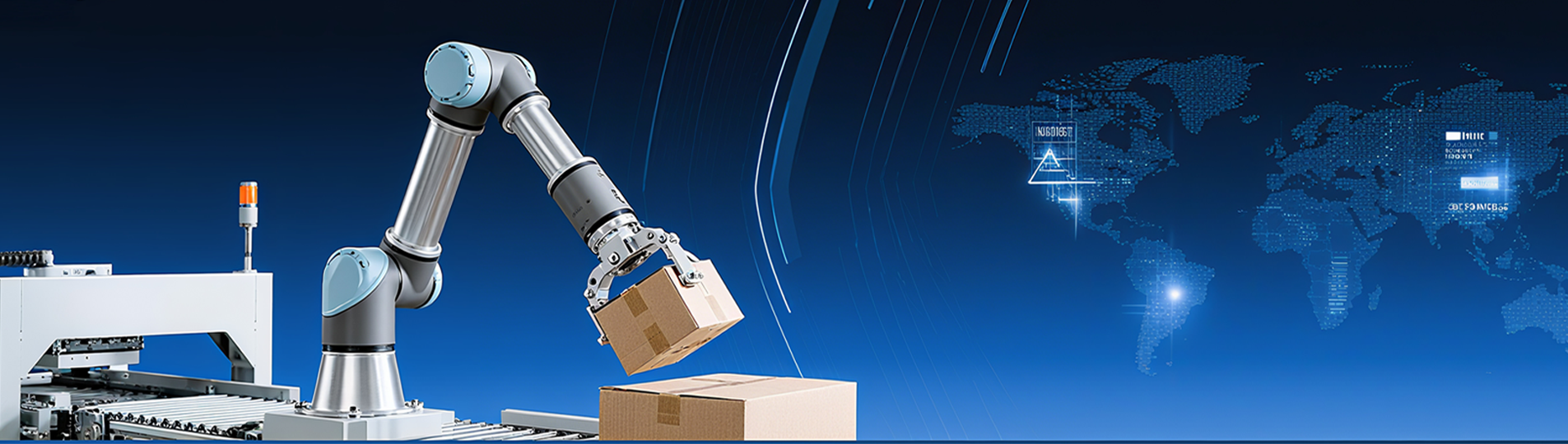
Servo-controlled robotic systems place grouped products into cartons or cases with exceptional precision.
5. Carton Sealing
Filled cartons are automatically sealed using tape, hot melt glue, or other sealing methods.
6. Final Output
Completed cartons are transferred to palletizing systems or warehouse logistics.
The entire process is monitored by PLC controls and touchscreen interfaces for easy operation.
10 Powerful Benefits of Automatic Secondary Packaging Machines
1. Dramatically Increase Production Speed
Automated packaging lines can operate continuously, often handling dozens of cartons every minute.
Higher throughput means more products shipped in less time.
2. Reduce Labor Costs
Instead of relying on multiple workers for manual packing, a single operator can supervise the entire system.
This lowers long-term operating expenses while reducing labor shortages.
3. Improve Packaging Consistency
Automation ensures every carton is packed using identical patterns.
This leads to:
- Better appearance
- Stronger cartons
- Reduced shipping damage
4. Minimize Human Error
Incorrect product counts, misplaced items, and inconsistent packaging become far less common.
This improves customer satisfaction and reduces returns.
5. Enhance Product Safety
Automated handling minimizes direct human contact, making these machines ideal for:
- Wet wipes
- Food products
- Pharmaceuticals
- Medical supplies
- Personal care products
6. Flexible Product Changeovers
Modern machines support multiple product sizes with quick recipe changes through HMI touchscreens.
This is especially valuable for manufacturers producing various SKUs.
7. Save Factory Space
Integrated systems combine several packaging processes into one compact production line.
8. Lower Packaging Waste
Accurate positioning reduces damaged cartons, wasted tape, and unnecessary packaging materials.
9. Easy Integration with Smart Factories
Most new-generation machines support:
- PLC automation
- Servo motors
- Industrial Ethernet
- Remote monitoring
- Data collection
These features help manufacturers adopt Industry 4.0 practices.
Industries That Use Automatic Secondary Packaging Machines
These systems are widely used across numerous industries, including:
- Wet wipes manufacturing
- Tissue paper production
- Food and beverage
- Pharmaceuticals
- Cosmetics
- Household cleaning products
- Baby care products
- Medical supplies
- Electronic products
- Consumer goods
As e-commerce continues to grow, reliable secondary packaging has become increasingly important for protecting products during shipping and improving warehouse efficiency.
Frequently Asked Questions
What is the difference between primary and secondary packaging?
Primary packaging directly contacts the product, such as a wet wipes pouch or medicine blister pack.
Secondary packaging groups multiple primary packages into transport-friendly cartons or boxes.
Can one machine package different products?
Yes.
Most modern automatic secondary packaging machines support multiple product sizes and carton dimensions through adjustable guides and programmable settings.
Is the machine suitable for high-speed production lines?
Absolutely.
High-speed models are specifically designed to synchronize with fast primary packaging equipment, helping prevent bottlenecks in production.
Does automation improve packaging quality?
Yes.
Servo-driven positioning and intelligent control systems provide consistent product placement and accurate carton filling, significantly reducing packaging defects.
Is maintenance difficult?
Not at all.
Most machines feature modular designs, making routine cleaning, maintenance, and component replacement straightforward. Preventive maintenance and operator training further improve long-term reliability.
As manufacturers face rising labor costs, increasing production demands, and stricter quality standards, investing in an automatic secondary packaging machine has become a strategic move rather than a luxury.
From reducing labor expenses and improving packaging consistency to increasing production speed and supporting smart factory integration, these machines deliver measurable advantages across a wide range of industries.
Whether you manufacture wet wipes, tissue products, pharmaceuticals, food, cosmetics, or consumer goods, the right secondary packaging solution can help streamline your operations, enhance product protection, and strengthen your competitive edge. By selecting a system tailored to your production needs and future growth, you can achieve greater efficiency, higher profitability, and long-term success in an increasingly automated world.