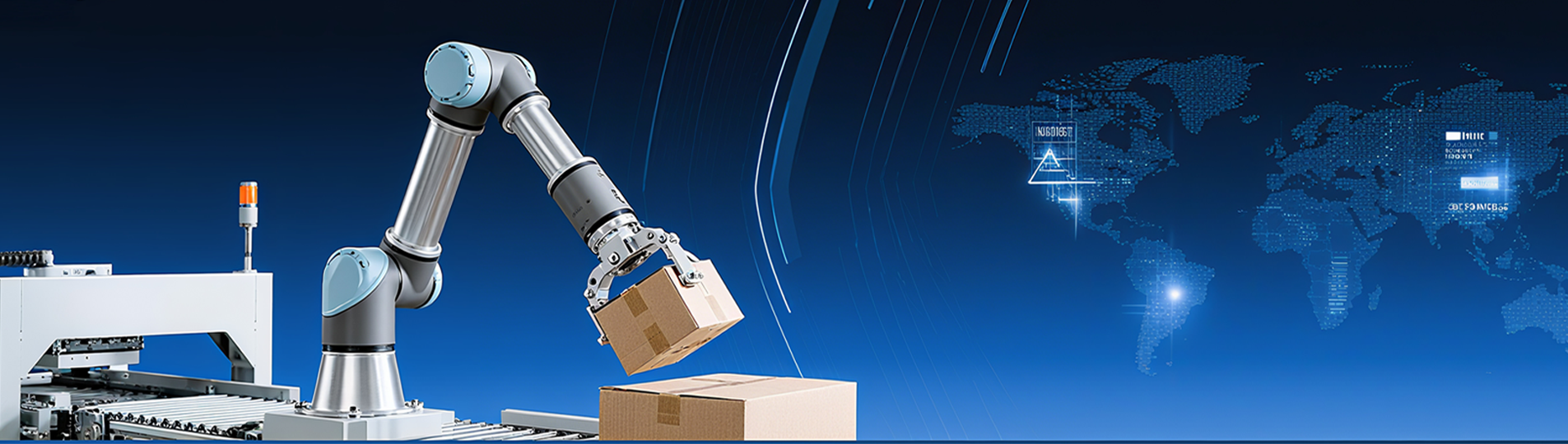
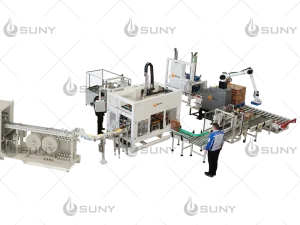
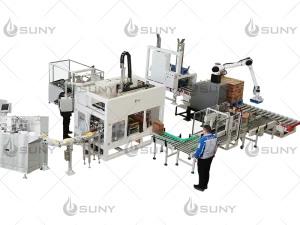
In the rapidly evolving landscape of global manufacturing and logistics, operational efficiency and cost management have become paramount. According to recent packaging machinery news, a significant and sustained rise in labor costs across major industrial markets is acting as a primary catalyst for a profound technological shift: the transition from standalone, semi-automatic machinery to fully integrated, complete packaging lines. For industries dealing with high-volume production, particularly electronics, e-commerce, food and beverage, and consumer goods, automation is no longer a luxury—it is an absolute necessity for business survival and growth.
At the heart of this automation revolution is the end-of-line packaging process. Traditionally a labor-intensive stage, secondary packaging—which encompasses carton erecting, product loading, and case sealing—is being completely overhauled. Companies are discovering that attempting to patch together disparate machines or relying on manual intervention between stages creates severe bottlenecks. Instead, the market is experiencing an unprecedented surge in demand for unified systems that seamlessly connect carton folding machines (carton erectors), automatic case packers, and case sealing machines into a singular, synchronized workflow.
The Financial Reality of Rising Labor Costs
The economic pressures facing modern manufacturing facilities are multi-faceted. Rising minimum wages, increased expenses related to workplace safety regulations, and the growing costs of employee benefits have significantly inflated the hourly cost of manual labor. Furthermore, the manufacturing sector is grappling with a severe structural labor shortage. Young workers are increasingly reluctant to take on repetitive, physically demanding, and monotonous roles on the packaging floor. High turnover rates lead to continuous recruitment and training costs, further draining corporate resources.
When calculating the Return on Investment (ROI) for automated packaging machinery, the math has shifted dramatically. A decade ago, a company might have justified manual case packing based on low labor rates. Today, when factoring in the total cost of employment alongside the risk of human error, injuries from repetitive strain, and inconsistent throughput, the payback period for a complete packaging line has dropped significantly—often to less than 18 to 24 months. Automation provides absolute cost predictability, effectively shielding businesses from the volatile fluctuations of the labor market.
The Synergy of a Complete Packaging Line
A complete packaging line delivers value far exceeding the sum of its individual components. By automating the entire process from a flat corrugated blank to a pallet-ready sealed box, manufacturers eliminate the operational friction that reduces overall equipment effectiveness (OEE). Let us examine how the core elements work in perfect harmony:
1. High-Speed Carton Erectors The process begins with the carton erector, a machine engineered to take flat-packed cardboard blanks, transform them into perfect three-dimensional boxes, and securely seal the bottom flaps with tape or hot-melt glue. Manual box folding is notoriously slow and inconsistent, often resulting in slightly skewed boxes that jam downstream machinery. Modern automatic carton erectors ensure absolute geometric precision at high speeds. This precise shaping is critical because any structural irregularity in the box can cause catastrophic failures during the subsequent automated packing phase.
2. Intelligent Case Packers Once the box is formed, it moves immediately into the case packing section. This is where the true complexity of automation shines. Case packers can be configured as top-load, side-load, or bottom-load systems, depending on the nature of the product. Utilizing advanced product grouping mechanisms, vision inspection systems, and delta or multi-axis robotic arms, modern case packers gently collate, count, and orient products before placing them into the erected cartons. Automating this step eliminates the primary bottleneck of manual lines, where human operators struggle to match the speed of upstream manufacturing equipment.
3. Precision Case Sealers The final stage of the integrated line is the case sealer. After the products are packed, the carton passes into the sealer, which automatically folds the top flaps and applies packaging tape or hot-melt adhesive to secure the box. Advanced sealers feature self-adjusting mechanisms that can handle random box sizes sequentially, making them ideal for dynamic environments like e-commerce fulfillment centers. A perfectly sealed box ensures product security during transit, protects against contamination, and provides a professional aesthetic upon delivery to the end customer.
Eliminating Bottlenecks Through Full Integration
The primary vulnerability of a fragmented packaging setup is the “interstitial risk”—the gaps and transport phases between isolated machines. When a carton erector operates independently from a case packer, accumulation conveyors are required, and any minor timing mismatch can cause a total line stoppage.
A complete packaging line solves this through central control systems, typically driven by integrated Programmable Logic Controllers (PLCs) with human-machine interfaces (HMIs). The entire line communicates in real-time. If the case sealer detects a temporary blockage downstream, it instantly signals the case packer to slow down, which in turn regulates the speed of the carton erector. This harmonious synchronization prevents product damage, reduces wear and tear on components, and maximizes the overall throughput of the facility.
Additionally, integrated smart control systems allow operators to perform quick changeovers via a single central control panel. In modern production environments that require frequent changes to packaging specifications, this can reduce changeover times from hours to mere minutes, vastly improving the line’s flexibility and adaptability. This high degree of flexibility enables companies to easily handle diverse order requirements without sacrificing valuable production time.
Conclusion: Future-Proofing Your Operations
As the latest packaging machinery news consistently highlights, the macroeconomic forces driving up labor costs are not temporary trends; they represent a permanent structural shift in the global workforce. Businesses that continue to rely heavily on manual labor for secondary packaging will inevitably face shrinking margins, compromised throughput, and a distinct lack of competitiveness in the international marketplace.
Investing in a complete packaging line—combining a state-of-the-art carton erector, a high-speed case packer, and a reliable case sealer—is the ultimate way to future-proof your production operations. By replacing unpredictable human labor with highly reliable, precise, and continuous mechanical automation, manufacturers can stabilize their operational costs, guarantee product quality, and scale their output seamlessly to meet growing market demands. In the modern era of smart manufacturing, an automated end-of-line packaging solution is no longer just an operational upgrade; it is a vital strategic cornerstone for long-term business success.