If you’re still relying on manual packing or semi-automatic processes, you’re not just slowing down production—you’re leaving money on the table. In today’s competitive manufacturing landscape, efficiency isn’t optional; it’s survival.
A case packing and palletizing line is no longer a luxury reserved for large factories. It’s a game-changing solution that helps businesses scale faster, reduce costs, and deliver consistent quality.
So, what exactly makes this system so powerful? Let’s break it down in a way that actually helps you make smarter decisions.
What Is a Case Packing and Palletizing Line?
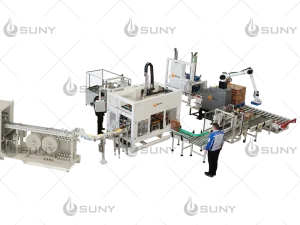
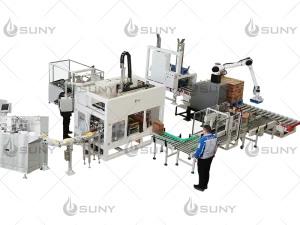
At its core, a case packing and palletizing line is a fully or semi-automated system that:
- Packs products into cartons or cases
- Seals and organizes them
- Stacks them onto pallets for shipping
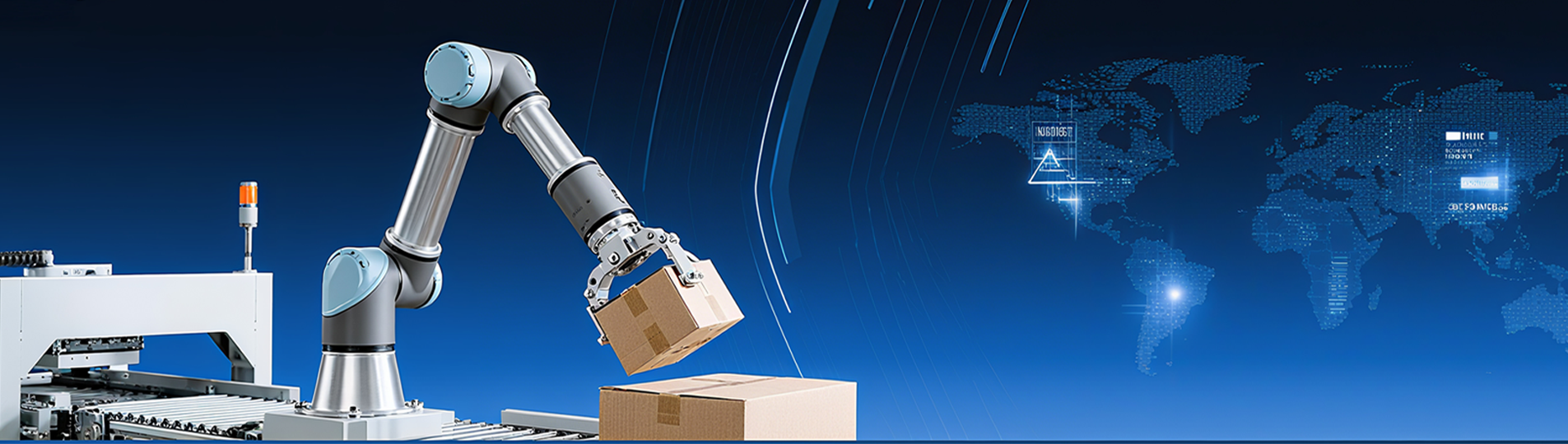
It integrates robotics, conveyors, and smart control systems to streamline the entire end-of-line packaging process.
7 Key Advantages You Should Know
1. ⚡ Massive Boost in Production Efficiency
Manual packing is slow and inconsistent. Automated lines can operate 24/7, dramatically increasing throughput.
👉 Many factories report 30%–70% productivity improvement after automation.
2. 💰 Significant Labor Cost Reduction
Labor shortages and rising wages are real problems. A case packing and palletizing line can replace multiple manual positions.
- Reduce dependency on human labor
- Lower long-term operational costs
- Minimize training and management overhead
3. 📦 Consistent Packaging Quality
Humans get tired. Machines don’t.
Automation ensures:
- Uniform case packing
- Accurate product placement
- Stable pallet stacking
This reduces product damage and improves your brand image.
4. 🧠 Smart Integration with Production Lines
Modern systems integrate seamlessly with upstream machines like filling or wrapping lines.
- Real-time monitoring
- Data tracking and optimization
- Compatibility with Industry 4.0 systems
👉 This means better decision-making, not just faster packing.
5. 🔄 Flexibility for Multiple Products
Worried about changing SKUs? Don’t be.
Advanced systems can:
-
- Switch between product sizes quickly
- Handle different packaging formats
Adapt to seasonal demand
6. 🛡️ Improved Workplace Safety
Manual palletizing is one of the most injury-prone tasks.
Automation helps:
- Reduce heavy lifting
- Minimize repetitive strain injuries
- Create a safer work environment
7. 🚚 Optimized Logistics & Storage
A well-organized pallet means better transportation efficiency.
- Higher stacking stability
- Better space utilization
- Reduced shipping damage
👉 This directly impacts your logistics costs and customer satisfaction.
Frequently Asked Questions (FAQ)
❓ Is a case packing and palletizing line worth the investment?
Absolutely—if you’re producing at scale. Most businesses see ROI within 12–24 months, thanks to labor savings and increased efficiency.
❓ Can small or medium businesses afford it?
Yes. Modular and semi-automatic solutions are now available, making it accessible even for growing companies.
❓ How difficult is it to operate?
Modern systems are designed with user-friendly interfaces. With basic training, operators can manage the system efficiently.
❓ What industries benefit the most?
- Food & beverage
- Wet wipes & hygiene products
- Pharmaceuticals
- Household goods
Let’s be honest—manual packing is a bottleneck. If you want to scale, reduce costs, and stay competitive, investing in a case packing and palletizing line is one of the smartest moves you can make.
It’s not just about automation. It’s about transforming your entire production mindset—from reactive to optimized.