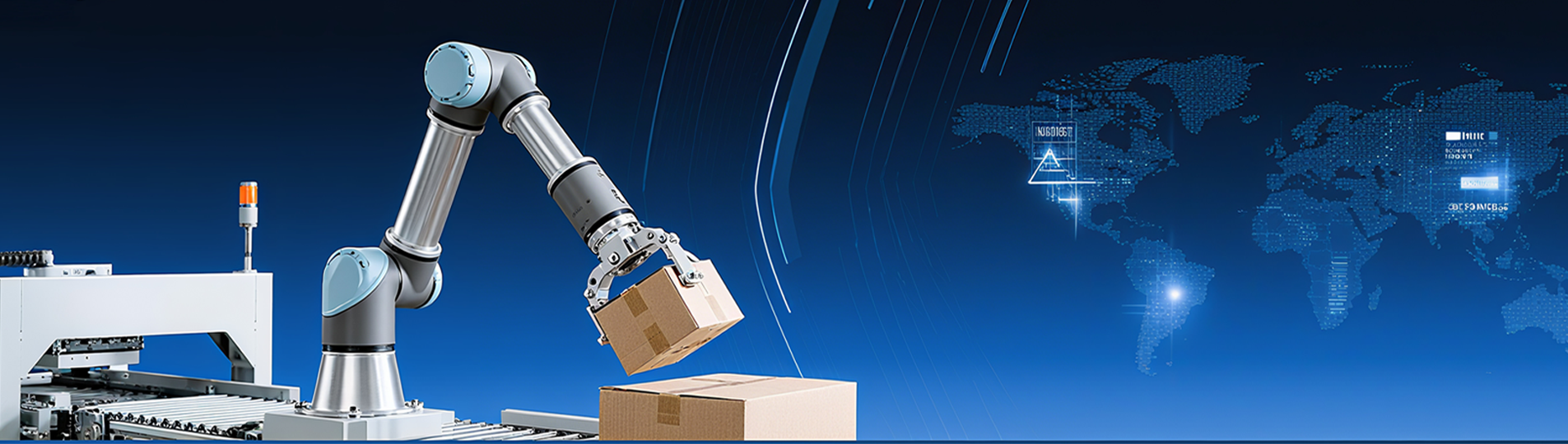
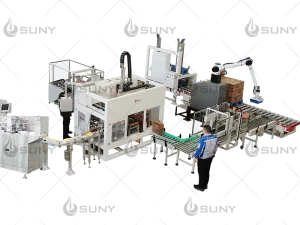
In modern wet wipes manufacturing, efficient secondary packaging is essential for maintaining continuous production and preparing finished products for shipment. A wet wipes cartoning and palletizing line automates the process of transferring packaged wipes, forming shipping cartons, loading products, sealing cases, and stacking finished cartons onto pallets.
SUNY provides customized wet wipes cartoning and palletizing solutions that integrate automatic conveying, carton erecting, case packing, carton sealing, pallet feeding, and robotic palletizing. By connecting these processes into one coordinated system, manufacturers can reduce manual handling, improve packaging consistency, and optimize end-of-line operations.
Whether you manufacture baby wipes, disinfectant wipes, personal care wipes, or household cleaning wipes, a fully automatic packaging line can be configured according to your product specifications, production speed, carton dimensions, and factory layout.
What Is a Wet Wipes Cartoning and Palletizing Line?
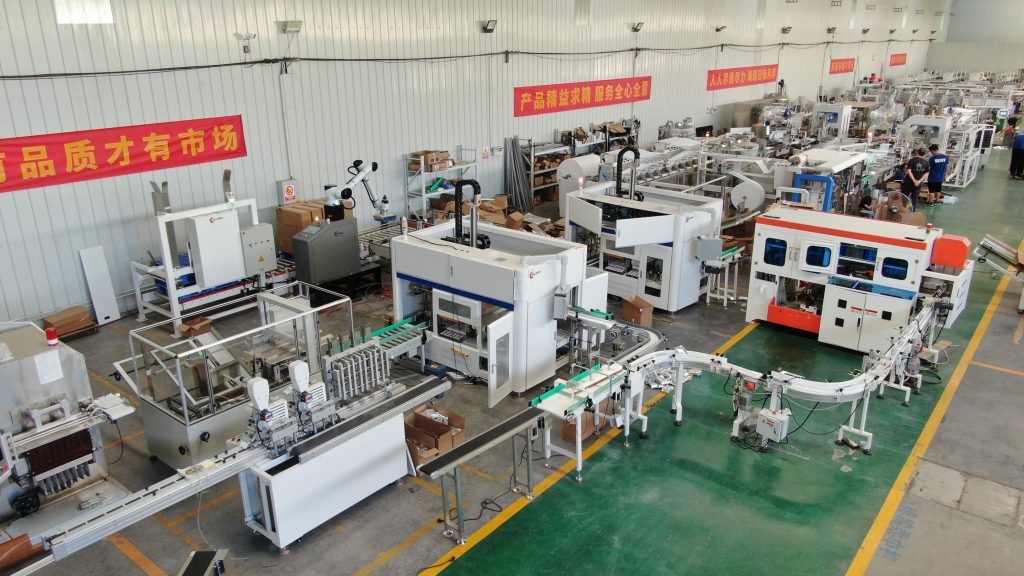
A wet wipes cartoning and palletizing line is an integrated packaging automation system designed to handle finished wet wipes products after primary packaging. It connects multiple machines to create a continuous workflow from individual wipe packs to palletized shipping cartons.
Depending on the production requirements, a complete system can include:
- Wet wipes packaging machine
- Automatic product conveyor
- Automatic carton erector
- Automatic case packing machine
- Roller conveyor system
- Automatic carton sealing machine
- Pallet auto feeder
- Robotic palletizer
Each machine performs a specific task while working with the other equipment to improve production flow. The complete configuration can be customized for different wet wipes packaging formats, carton specifications, and required output.
How Does a Fully Automatic Wet Wipes Packaging Line Work?
A fully automatic wet wipes cartoning and palletizing line typically follows eight stages, from primary packaging to finished pallet handling.
1. Wet Wipes Production and Primary Packaging
The process begins with the wet wipes production and packaging machine. Depending on the product type, the upstream equipment can perform operations such as nonwoven fabric folding, liquid dosing, cutting, stacking, and individual pack sealing.
Finished packs are then transferred to the secondary packaging section.
2. Automatic Product Conveying
A conveyor transports individually packaged wet wipes to the case packing machine. Stable product transfer helps connect the upstream packaging equipment with downstream cartoning equipment.
The conveyor layout can be designed according to the available factory space, production speed, and machine arrangement.
3. Automatic Carton Erecting
The automatic carton erector opens flat-packed corrugated cartons, forms them into the required shape, and transfers the erected cartons to the packing station.
Consistent carton forming helps prepare boxes for loading while reducing repetitive manual box preparation.
4. Automatic Case Packing
The case packing machine arranges finished wet wipes packs according to the specified packing pattern and loads them into the cartons.
The packing configuration can be adjusted according to product dimensions, the number of packs per carton, and shipping case size. This flexibility is particularly useful for manufacturers handling multiple product specifications.
5. Carton Conveying and Sealing
After loading, the cartons move through a roller conveyor to the sealing machine. The machine closes and seals the cartons using the selected sealing method, such as adhesive tape.
Secure carton sealing helps prepare finished cases for warehouse storage, transportation, and distribution.
6. Automatic Pallet Feeding
The pallet auto feeder supplies empty pallets to the designated palletizing position. Automatic pallet feeding reduces the need for operators to repeatedly position pallets manually.
The pallet supply arrangement can be selected according to the required production flow and palletizing configuration.
7. Robotic Palletizing
The robotic palletizer picks up sealed cartons and stacks them onto pallets according to a programmed pattern. The stacking arrangement can be configured to suit carton dimensions, pallet size, load stability, and transportation requirements.
Robotic palletizing reduces repetitive lifting and helps create consistent pallet loads for subsequent handling.
8. Finished Pallet Conveying
Once the pallet reaches its target stacking quantity, it can be transferred to the designated collection or warehouse area through a pallet conveyor system, depending on the line configuration.
This final stage helps establish a more organized flow between packaging, palletizing, and finished goods logistics.
Key Advantages of an Automatic Wet Wipes Cartoning and Palletizing Line
Reduced Manual Handling
Manual carton forming, case packing, sealing, and pallet stacking require repetitive handling throughout the shift. Automating these operations can reduce labor requirements for repetitive tasks and allow employees to focus on quality inspection, equipment monitoring, and production management.
Automating repetitive packaging and material handling tasks can also help improve workplace ergonomics. For additional guidance, refer to the OSHA ergonomics resources, which provide information on reducing ergonomic risks in the workplace.
Improved Packaging Consistency
Automatic carton forming, product grouping, case loading, and carton sealing help maintain consistent packaging procedures. A properly configured system can reduce errors caused by manual counting, incorrect product arrangement, and inconsistent carton handling.
Higher End-of-Line Efficiency
When the case packing and palletizing equipment is matched to the upstream production speed, finished wet wipes packs can move through the packaging process with fewer manual transfer points.
The actual throughput depends on the wet wipes packaging speed, case packing configuration, carton dimensions, and palletizing cycle. The complete line should therefore be designed around the required production capacity.
Flexible Packaging Configurations
Wet wipes manufacturers may produce different pack sizes, case quantities, and carton dimensions. A customized packaging line can accommodate selected product formats and carton specifications, with changeover procedures determined by the equipment configuration.
This flexibility helps manufacturers manage product variations without designing a completely separate packaging system for every product.
Better Warehouse and Shipping Preparation
Consistent carton sealing and robotic pallet stacking help create orderly pallet loads. This supports easier forklift handling, warehouse organization, and preparation for transportation.
For factories shipping large volumes of wet wipes, automated palletizing can improve the coordination between production output and downstream logistics.
Applications of Wet Wipes Cartoning and Palletizing Equipment
A customized wet wipes packaging line can be designed for various hygiene and cleaning products, including:
- Baby wipes
- Facial and personal care wipes
- Alcohol wipes
- Disinfectant wipes
- Household cleaning wipes
- Makeup remover wipes
- Pet wipes
- Industrial cleaning wipes
The appropriate configuration depends on the primary package format, product dimensions, carton style, packing quantity, and required production speed.
How to Choose the Right Wet Wipes Cartoning and Palletizing Line
Before selecting an automatic packaging system, manufacturers should evaluate the following factors.
1. Product specifications: Confirm the wet wipes pack dimensions, package type, weight, and product variations.
2. Required production capacity: Identify the target output and the operating speed of the existing wet wipes packaging machine.
3. Carton dimensions and packing quantity: Determine the shipping carton size, the number of packs per carton, and the required loading arrangement.
4. Palletizing requirements: Specify the pallet dimensions, cartons per layer, total stacking height, and desired pallet pattern.
5. Factory layout: Provide the available installation space, conveyor direction, column positions, and connections to existing equipment.
6. Automation level: Decide whether the project requires carton erecting, automatic case packing, sealing, pallet feeding, robotic palletizing, or a complete integrated solution.
7. Future production needs: Consider planned product changes, additional packaging formats, and potential capacity expansion.
Providing these details helps the engineering team develop a solution that matches actual production requirements instead of relying on a standard configuration that may not fit the factory.
Customized Wet Wipes Cartoning and Palletizing Solutions from SUNY
SUNY provides integrated packaging automation solutions for manufacturers seeking to improve their end-of-line operations. A wet wipes cartoning and palletizing line can combine carton erecting, case packing, carton sealing, automatic pallet feeding, and robotic palletizing into one coordinated system.
The equipment configuration can be tailored to the customer’s production capacity, package specifications, carton dimensions, pallet requirements, and factory layout.
For new production facilities, an integrated solution helps coordinate equipment selection and line planning from the beginning. For existing factories, the packaging system can be evaluated for integration with current wet wipes production and primary packaging equipment.
To learn more about the available configuration, visit our Wet Wipes Cartoning and Palletizing Line Solution.
You can also explore our automatic case packing solutions to learn more about secondary packaging equipment.
Frequently Asked Questions
What is a wet wipes cartoning and palletizing line?
It is an integrated automation system that transfers packaged wet wipes, forms shipping cartons, loads products into cases, seals cartons, and stacks finished cases onto pallets.
Can the packaging line handle different wet wipes pack sizes?
Yes. The line can be configured for selected product dimensions, packaging formats, carton sizes, and case quantities. The available changeover range depends on the machine configuration.
Can the line connect to an existing wet wipes production machine?
Yes. Integration can be evaluated according to the existing machine’s output, discharge height, conveyor direction, package dimensions, and control requirements.
What equipment is included in a complete wet wipes cartoning and palletizing line?
A typical configuration includes product conveyors, an automatic carton erector, a case packing machine, a carton sealing machine, a pallet auto feeder, a robotic palletizer, and associated conveying equipment.
How can I obtain a quotation for a wet wipes cartoning and palletizing line?
Provide your wet wipes pack dimensions, required output, packs per carton, carton dimensions, pallet specifications, and factory layout. These details help the engineering team evaluate the appropriate equipment configuration and prepare a preliminary proposal.
Get a Customized Wet Wipes Packaging Solution
Looking to automate your wet wipes secondary packaging process? SUNY can help you evaluate a suitable cartoning and palletizing configuration based on your production requirements.
Contact our team with your product specifications, target capacity, and packaging requirements to discuss a customized solution for your factory.