If you’ve been around food, chemical, pet food, or daily-use consumables packaging lately, you’ve probably noticed one thing: bag-in-bag packaging is exploding.
Why? Because brands want cleaner secondary packaging, lower labor costs, higher output, and fewer human errors—all at the same time. And doing bag-in-bag manually just doesn’t cut it anymore.
That’s where bag-in-bag packaging automation equipment steps in.
In this guide, we’ll break down how bag-in-bag automation works, what problems it solves, what buyers really want to know (yes, we’ll answer the FAQs), and how to choose the right system for your production line—without drowning you in jargon.
What Is Bag-in-Bag Packaging Automation Equipment?
Bag-in-bag packaging automation equipment is a secondary packaging system designed to automatically insert small primary bags (like sachets, pouches, or pillow bags) into a larger outer bag.
Think of:
- Snack packs into a bulk bag
- Detergent sachets into a retail polybag
- Chemical powder packs into a transport bag
Instead of relying on manual loading, the system handles:
- Bag counting
- Bag grouping
- Opening the outer bag
- Inserting inner bags
- Sealing and discharging
All in one smooth, continuous workflow.
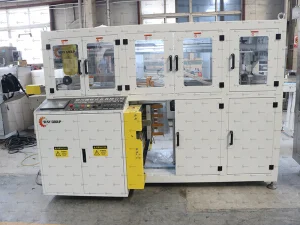
Bag-in-bag packaging automation equipment
Why Manufacturers Are Switching to Bag-in-Bag Automation
Let’s be blunt: manual bag-in-bag packing is expensive, slow, and inconsistent.
Here’s why automation is winning fast:
1. Massive Labor Cost Reduction
Automated bag-in-bag systems can replace 4–8 manual workers per shift, depending on output.
Industry data shows packaging automation can reduce labor costs by 30–60% in secondary packaging operations.
2. Higher and More Stable Output
Automation means:
- No fatigue
- No counting mistakes
- No speed drops during long shifts
Modern systems easily reach 10–25 bags per minute, depending on configuration.
3. Consistent Pack Quality
Every bag gets:
- Accurate counts
- Uniform appearance
- Reliable seals
That consistency matters for brand trust and downstream palletizing.
4. Cleaner, Safer Production
Fewer hands touching products = better hygiene and lower contamination risk, especially critical in food and chemical industries.
How Bag-in-Bag Packaging Automation Works?
Here’s the simplified flow most systems follow:
- Primary Bag Feeding
Finished small bags arrive from upstream VFFS or HFFS machines.
- Counting & Grouping
Sensors or vision systems count bags precisely and group them into preset quantities.
- Outer Bag Opening
The larger bag is automatically picked, opened, and held in position.
- Insertion Process
Grouped inner bags are smoothly inserted without crushing or misalignment.
- Sealing & Discharge
The outer bag is sealed (heat seal or sewing) and discharged for palletizing.
Simple on paper—but engineering this to run 24/7 without jams is where real expertise shows.
Frequently Asked Questions (FAQs)
Is bag-in-bag packaging suitable for all industries?
Not all—but many. It’s widely used in:
- Food & snacks
- Pet food
- Daily chemicals
- Fertilizers
- Pharmaceutical auxiliaries
If your product is already in small bags, bag-in-bag is a strong candidate.
Can bag-in-bag systems handle different bag sizes?
Yes. Most modern machines support quick changeovers for:
- Different inner bag sizes
- Different quantities per outer bag
- Multiple outer bag dimensions
Servo-driven systems can switch recipes in minutes.
How accurate is automated bag counting?
High-end systems achieve 99.9% counting accuracy, especially when combined with checkweighers or vision verification.
What’s the ROI timeline?
In many cases, manufacturers recover investment within 12–24 months, mainly through labor savings and higher throughput.
Can it integrate with case packing and palletizing?
Absolutely. Bag-in-bag automation is often the missing middle link between primary packaging and robotic palletizing.
if you care about scalability, consistency, and long-term cost control.
Bag-in-bag packaging automation equipment is no longer “nice to have.” It’s becoming a baseline requirement for manufacturers who want to stay competitive in fast-moving markets.
If your line is growing, your labor costs are rising, or your packaging quality feels inconsistent—this is the upgrade worth serious consideration.