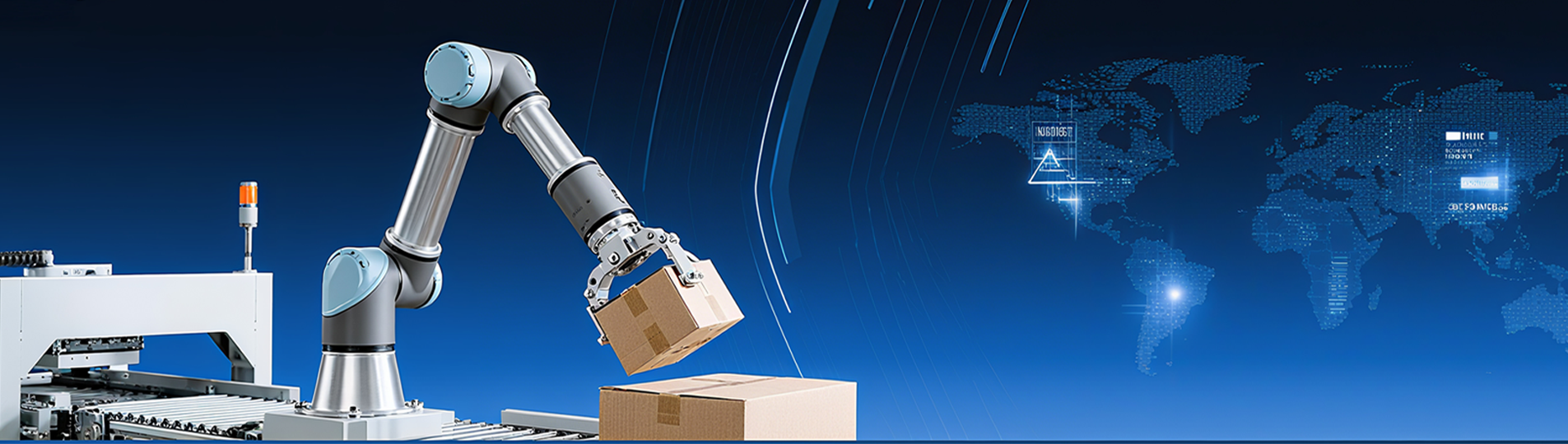
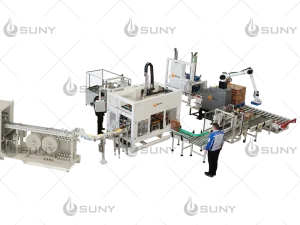
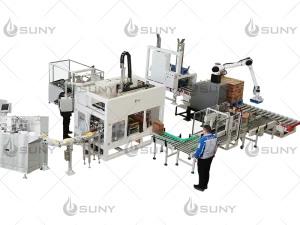
In today’s fast-moving manufacturing world, companies are under constant pressure to increase production efficiency, reduce labor costs, and deliver perfectly packaged products faster than ever. Whether in food and beverage, pharmaceuticals, personal care, household products, or consumer goods, secondary packaging plays a critical role in protecting products and preparing them for transportation and distribution.
A Secondary Packaging Automation Case Packing Line has become one of the most valuable solutions for manufacturers looking to upgrade their packaging operations. By automatically collecting products, arranging them into cases, sealing cartons, and preparing packages for shipment, these advanced systems help businesses achieve higher productivity with fewer manual operations.
As e-commerce growth, global supply chains, and customer expectations continue to rise, investing in automated case packing technology is no longer just an option—it is becoming a competitive advantage.
In this article, we will explore what a secondary packaging automation case packing line is, how it works, why manufacturers need it, and the key factors to consider before choosing the right solution.
What Is a Secondary Packaging Automation Case Packing Line?
A secondary packaging automation case packing line is an automated system designed to place primary packaged products into larger containers, usually cartons, for storage, transportation, and distribution.
Unlike primary packaging, which directly wraps or contains the product, secondary packaging focuses on grouping individual products together. For example:
- Individual wet wipe packs placed into cartons
- Bottles arranged inside shipping cases
- Food packages packed into transportation boxes
- Cosmetic products grouped for retail distribution
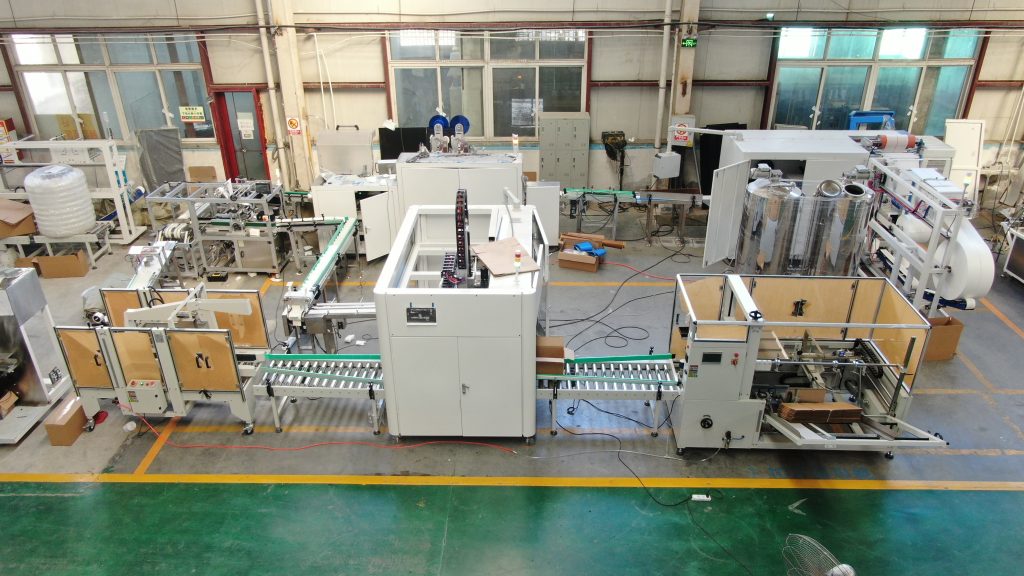
A complete automated case packing line usually includes:
- Product feeding system
- Conveyor system
- Automatic sorting and positioning unit
- Robotic or mechanical case packer
- Carton forming machine
- Carton sealing machine
- Palletizing system
By integrating multiple processes into one production line, manufacturers can create a smooth and continuous packaging workflow.
Why Are Manufacturers Choosing Automated Case Packing Lines?
1. Dramatically Increase Production Efficiency
One of the biggest advantages of automation is speed.
Traditional manual case packing requires workers to pick, arrange, and place products into cartons individually. This process is slow and often affected by fatigue, especially during long production shifts.
An automated case packing line can operate continuously with consistent speed and accuracy. Depending on the product type and machine configuration, modern systems can handle hundreds of cases per hour.
For high-volume industries such as wet wipes, beverages, and household products, automation helps manufacturers meet increasing market demand without expanding labor teams.
2. Reduce Labor Costs and Improve Workplace Safety
Labor shortages have become a major challenge for manufacturers worldwide. Packaging tasks often involve repetitive movements, which can lead to worker fatigue and reduced efficiency.
A secondary packaging automation case packing line reduces the need for repetitive manual operations. Employees can focus on quality control, machine supervision, and production management instead.
Additionally, automation improves workplace safety by reducing heavy lifting and repetitive physical tasks.
How Does a Secondary Packaging Automation Case Packing Line Work?
Although different industries require different designs, most automated case packing systems follow a similar process.
Step 1: Product Feeding
Finished products enter the packaging line through conveyors. Sensors detect product position and ensure accurate transportation.
Step 2: Product Arrangement
The system automatically organizes products according to the required packing pattern.
For example:
- 10 bags per carton
- 20 bottles per case
- Multiple product layers inside one box
Advanced systems use servo motors, vision technology, and PLC control systems to achieve precise positioning.
Step 3: Automatic Case Loading
The case packing machine places products into cartons automatically. Depending on the application, manufacturers can choose:
- Vertical case packing
- Horizontal case packing
- Robotic case packing
Step 4: Carton Sealing and Output
After loading, cartons are sealed using tape, glue, or other sealing methods. Finished cases then move to storage, palletizing, or shipping areas.
This fully automated process creates a reliable packaging solution with minimal human intervention.
What Industries Use Secondary Packaging Automation?
Secondary packaging automation is widely used across many industries.
Food and Beverage Industry
Manufacturers use automated case packing lines for:
- Snack packages
- Beverage bottles
- Frozen foods
- Dairy products
Automation ensures hygienic handling and consistent packaging quality.
Personal Care and Hygiene Products
Products such as:
- Wet wipes
- Tissue products
- Sanitary products
- Disposable medical supplies
benefit significantly from automated packaging because of their high production volumes.
Pharmaceutical Industry
Pharmaceutical manufacturers require accurate and reliable packaging processes. Automated case packing helps maintain product safety and traceability.
Household Products
Cleaning products, detergents, and daily-use goods often require fast and efficient secondary packaging solutions.
Frequently Asked Questions About Secondary Packaging Automation Case Packing Lines
1. What Is the Difference Between Primary and Secondary Packaging?
Primary packaging directly protects the product, such as a wet wipe pouch or beverage bottle.
Secondary packaging groups multiple primary packages together for transportation and storage, such as placing multiple pouches into a carton.
Both processes are important, but secondary packaging focuses more on logistics efficiency.
2. Can a Case Packing Line Be Customized?
Yes. Modern automated case packing lines can be customized according to:
- Product size
- Production capacity
- Packaging materials
- Factory layout
- Automation requirements
Manufacturers can choose different feeding systems, packing methods, and robotic solutions based on their production goals.
3. How Much Labor Can an Automated Case Packing Line Save?
The amount of labor reduction depends on the production process and machine configuration. In many applications, automation can replace several manual packing stations while improving production consistency.
Companies often achieve better productivity with fewer operators while maintaining higher output quality.
4. Is an Automated Case Packing Line Suitable for Small Businesses?
Yes. Although large factories commonly use automated packaging systems, many manufacturers now choose modular solutions that can grow with their business.
A scalable system allows companies to increase automation gradually as production demand increases.
A Secondary Packaging Automation Case Packing Line is a powerful investment for manufacturers seeking higher efficiency, lower labor costs, and improved packaging reliability.
From food and beverages to hygiene products and pharmaceuticals, automated case packing solutions help businesses create faster, safer, and more consistent production processes.
By selecting the right system based on production requirements, product characteristics, and future expansion plans, manufacturers can transform their packaging operations and stay competitive in an increasingly automated industry.
Automation is not just improving packaging—it is shaping the future of manufacturing.