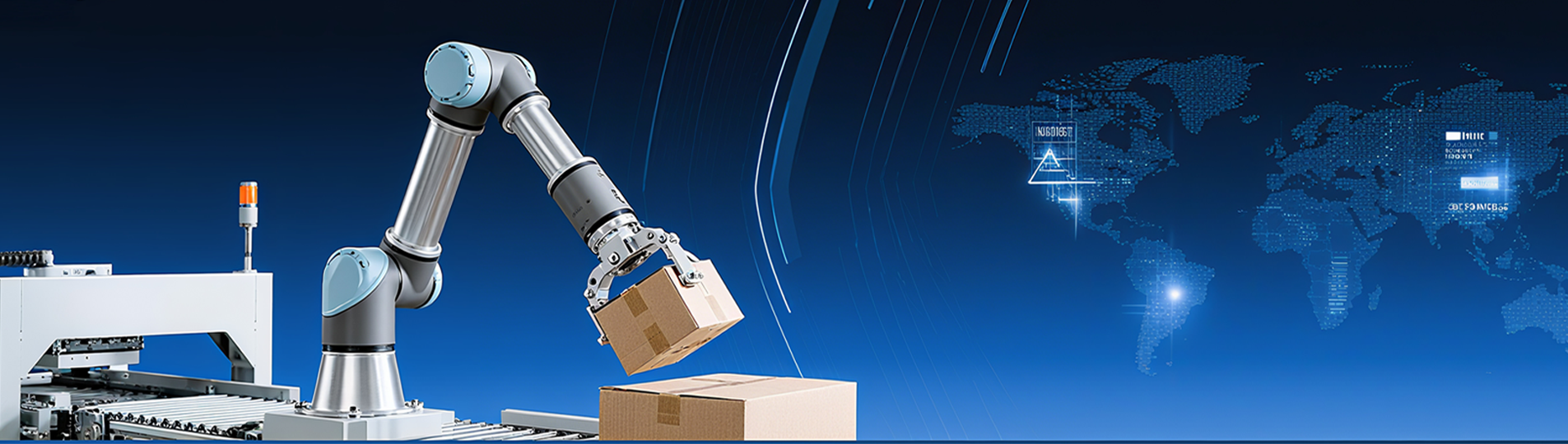
In modern manufacturing, packaging is no longer an afterthought—it’s a competitive weapon. As labor costs rise, order volumes fluctuate, and customers demand faster delivery with flawless presentation, automatic secondary packaging machines have become essential rather than optional.
Whether you’re packing bags into cartons, bottles into cases, or bundles into boxes, secondary packaging is where efficiency, accuracy, and brand perception collide. Companies that automate this step don’t just pack faster—they reduce errors, cut costs, and future-proof their production lines.
What are Automated Secondary Packaging Machines?
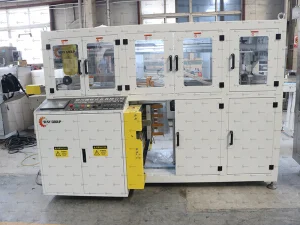
Automated secondary packaging machines are devices designed to automatically arrange and pack primary packaged products into secondary packaging containers, such as cartons, cases, trays, or shrink wrap, without manual intervention.
Unlike primary packaging machines that directly handle the product, secondary packaging machines focus on logistics, protection, and presentation.
Typical applications include:
- Packing bags into cartons
- Packing bundled products into shrink wrap
- Packaging products into retail-ready packaging
How Do Automated Secondary Packaging Machines Work?
While designs vary, most systems follow a clear and efficient workflow:
- Product Feeding and Sorting – Products are counted, aligned, and grouped.
- Positioning and Buffering – Products are correctly positioned for packaging.
- Carton or Case Forming – Cardboard is automatically folded and formed.
- Product Loading – Robots, pushers, or drop systems place products into the packaging container.
- Sealing and Discharge – Cartons are sealed, labeled, and sent to downstream processes.
Advanced systems integrate robots, vision systems, PLC controllers, and servo motors for high-speed, high-precision operation.
9 Key Advantages of Automated Secondary Packaging Machines
1. Significantly Increased Efficiency
Automated systems operate 3-5 times faster than manual packaging. According to industry data, automation can increase packaging throughput by up to 60%.
2. Reduced Labor Costs
Manual secondary packaging is labor-intensive. Automation reduces reliance on repetitive labor and helps manufacturers maintain profitability in the face of labor shortages.
3. Stable and Consistent Packaging Quality
Machines don’t get tired. Every carton is packaged with the same precision, enhancing brand image and reducing returns.
4. Reduced Product Damage
Precise operation minimizes drops, crushing, and misalignment, which is especially important for fragile or high-value goods.
5. Flexible Format Conversion
Modern machines support multiple SKUs and carton sizes, often with tool-free or quick-change designs.
6. Seamless Integration into Production Lines
Automatic secondary packaging machines can be easily integrated with primary packaging equipment, checkweighers, metal detectors, and palletizers.
7. Improved Workplace Safety
Automation reduces the risk of repetitive strain injuries and heavy lifting for operators.
8. Data and Traceability
Intelligent systems collect production data, enabling real-time monitoring, traceability, and optimization.
9. High Return on Investment
Most manufacturers achieve a return on investment within 12-24 months, especially in high-volume or multi-shift production environments.
Frequently Asked Questions (FAQs)
What products can be handled by automatic secondary packaging machines?
They are suitable for food, beverage, pharmaceuticals, personal care, chemicals, electronics, and industrial goods—handling bags, bottles, boxes, cans, and pouches.
Are these machines suitable for small and medium manufacturers?
Yes. Modular designs allow manufacturers to start with semi-automatic solutions and upgrade to fully automatic systems as production grows.
An automatic secondary packaging machine is more than a piece of equipment—it’s a productivity multiplier, a cost reducer, and a brand protector.
If your production line is struggling with labor shortages, inconsistent packing, or limited scalability, automation is not a luxury—it’s the logical next step. The earlier you adopt it, the faster you gain efficiency, stability, and market advantage.